
I had the opportunity to work with Kaia Olsen and other undergraduate researchers in our Volumetric Imaging Pipelines Lab. Our lab focused on capturing light through a 3D scanning method called Gaussian Splatting (GS). We aimed to innovate this technology by adapting it to more affordable equipment and open-source tools, while also creating a capture pipeline capable of recording movement within these scans. Overall, I had a great time learning about computer graphics, the filmmaking pipeline, and interdisciplinary collaboration.
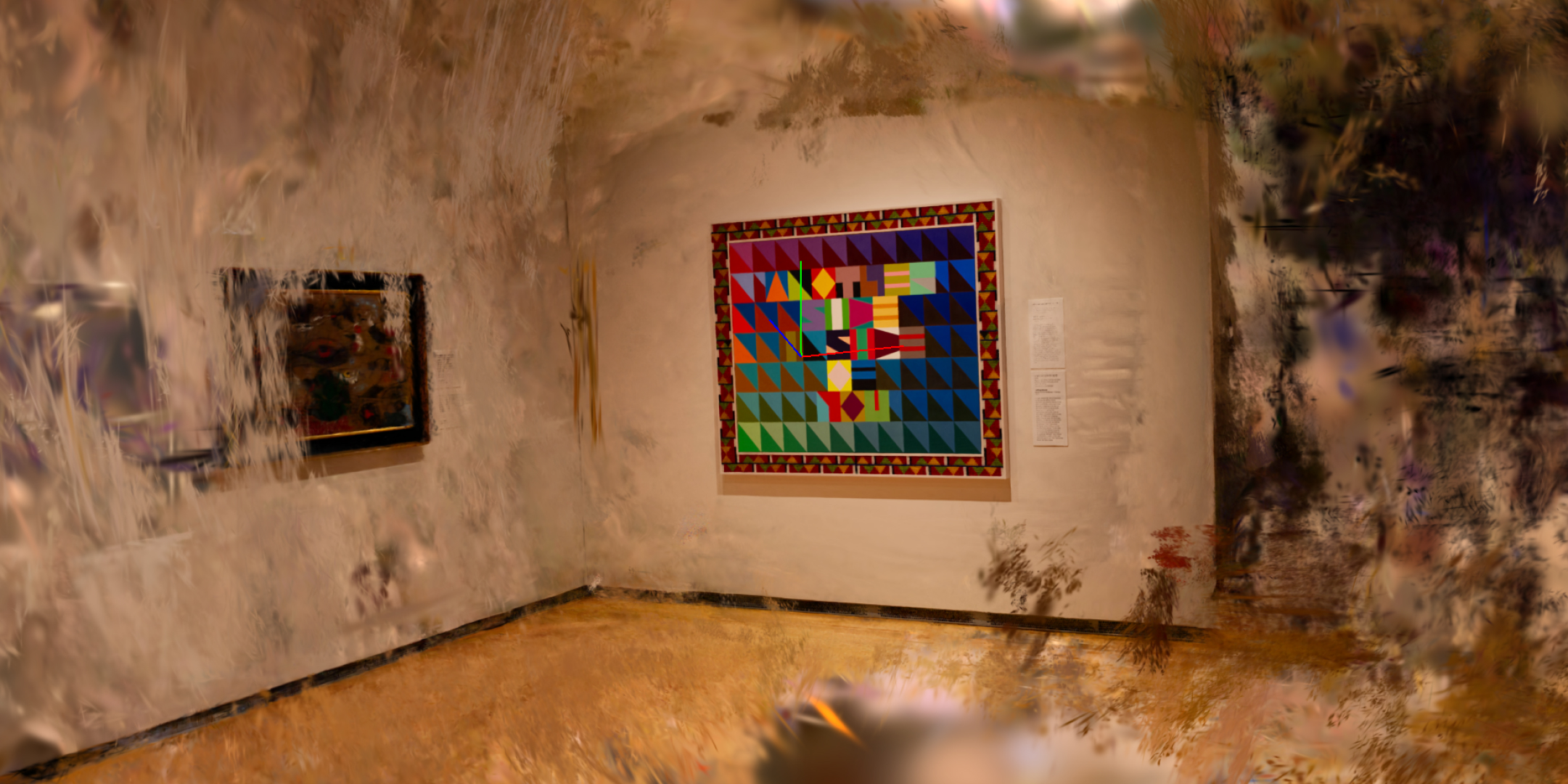
My first major project was with the Stanley Museum of Art. The research group had completed volumetric scans of the Stanley, and I worked on compiling them together in Unreal Engine to create an interactive prototype of the scanned space. I also had the opportunity to present this work at the Fall Undergraduate Research Festival and the University of Iowa Computing Conference. These experiences were a great way to practice communicating technical concepts to a broader audience.
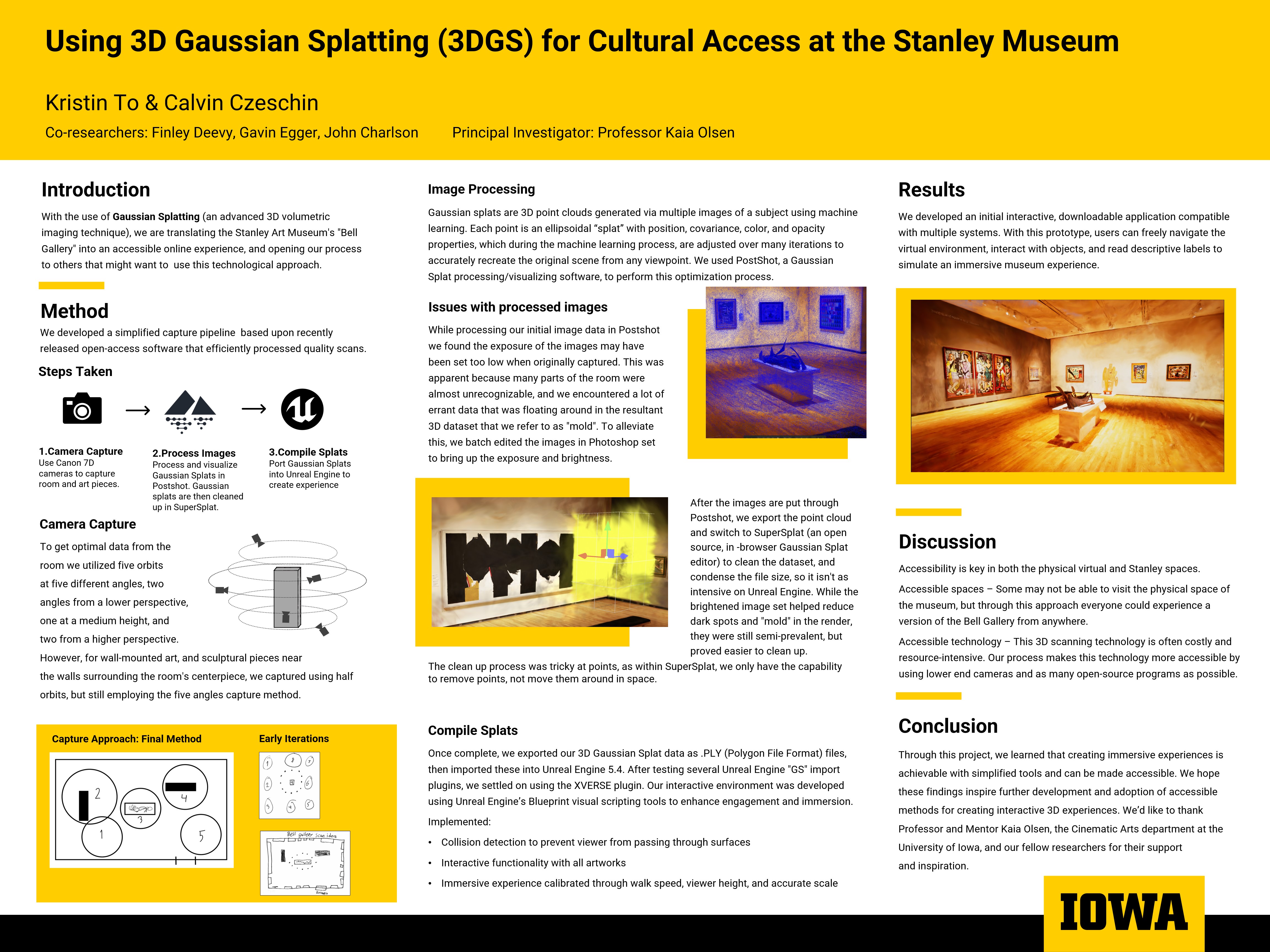
Colmap (https://github.com/colmap/colmap) - Create 3D reconstructions
Postshot (https://www.jawset.com/) - Create 3D reconstructions
Supersplat (https://superspl.at/) - Edit gaussian splats
Unreal Engine 5 (https://www.unrealengine.com/unreal-engine-5) - Compile 3D scans in immersive environment
XVerse (https://github.com/xverse-engine/XScene-UEPlugin) - UE 5 Gaussian Splatting plugin
Part of my lab was creating tools for artists to use with 3D volumetric video editing, improving pipeline and workflow for users with a non-technical background. I had the opportunity to work on the UI design and development of this applicaiton. Unfortunately, this software won't be revealed until SIGGRAPH 2026 but please contact me if you have any questions and I'd love to share!